 Fashion
Prints That Clash, Outfits That Work
By Sara Tilla
A small scarf is useful precisely because it does not dictate the entire outfit.
 WORDS BYAndrea HillsOctober 21, 2026
A small scarf is useful precisely because it does not dictate the entire outfit. It can add colour near the face, interrupt the straight line of a shirt or give a familiar bag a different expression. Folded away, it occupies very little room. Worn badly for your own preferences, it can feel fussy within minutes. The difference is usually less about mastering an elaborate knot and more about choosing a placement that works with your hair, neckline and actual day.
Vogue has documented the headscarf in fashion-week street style, including the use of small printed squares as head coverings. That is one reference, rather than the only way to approach the accessory. A scarf does not need to recreate a showgoer's outfit. Think of it as a movable patch of colour and texture, then decide where that patch would improve the clothes you already enjoy wearing.
Open the scarf fully and look at its shape. A square folds differently from a narrow rectangle, and a large square can produce more fabric than a small neckline needs. Hold it by one corner and notice how it falls. Some fabrics collapse softly; others retain a crisp edge. Neither is a problem, but the difference changes what you can reasonably expect from the finished knot or fold.
A slippery scarf may look beautiful draped at the neck but require repeated adjustment when used in the hair. A firmer cotton square can feel more secure as a bandanna while creating a bulkier knot under a close collar. Test the actual piece rather than choosing a method from its product name. Check the care label before washing or pressing it, particularly if it has a printed border or a finish you want to preserve.
A scarf worn close to the face becomes part of the relationship between your skin, hair and neckline. There is no universal shade that everyone must choose. Try the scarf with the top you intend to wear, in ordinary light, and decide whether you enjoy the effect. If the pattern feels too busy near your face, fold it so that a quieter section remains visible or move it down to the bag.
The edge often matters more than the centre. Folding a square diagonally can reveal a contrasting border as a strong stripe. Rolling it narrowly may turn a complicated illustration into a few bands of colour. Before concluding that a scarf does not suit your wardrobe, explore what its different folds show. The same printed square can read as decorative, graphic or almost plain depending on how much of it you expose.
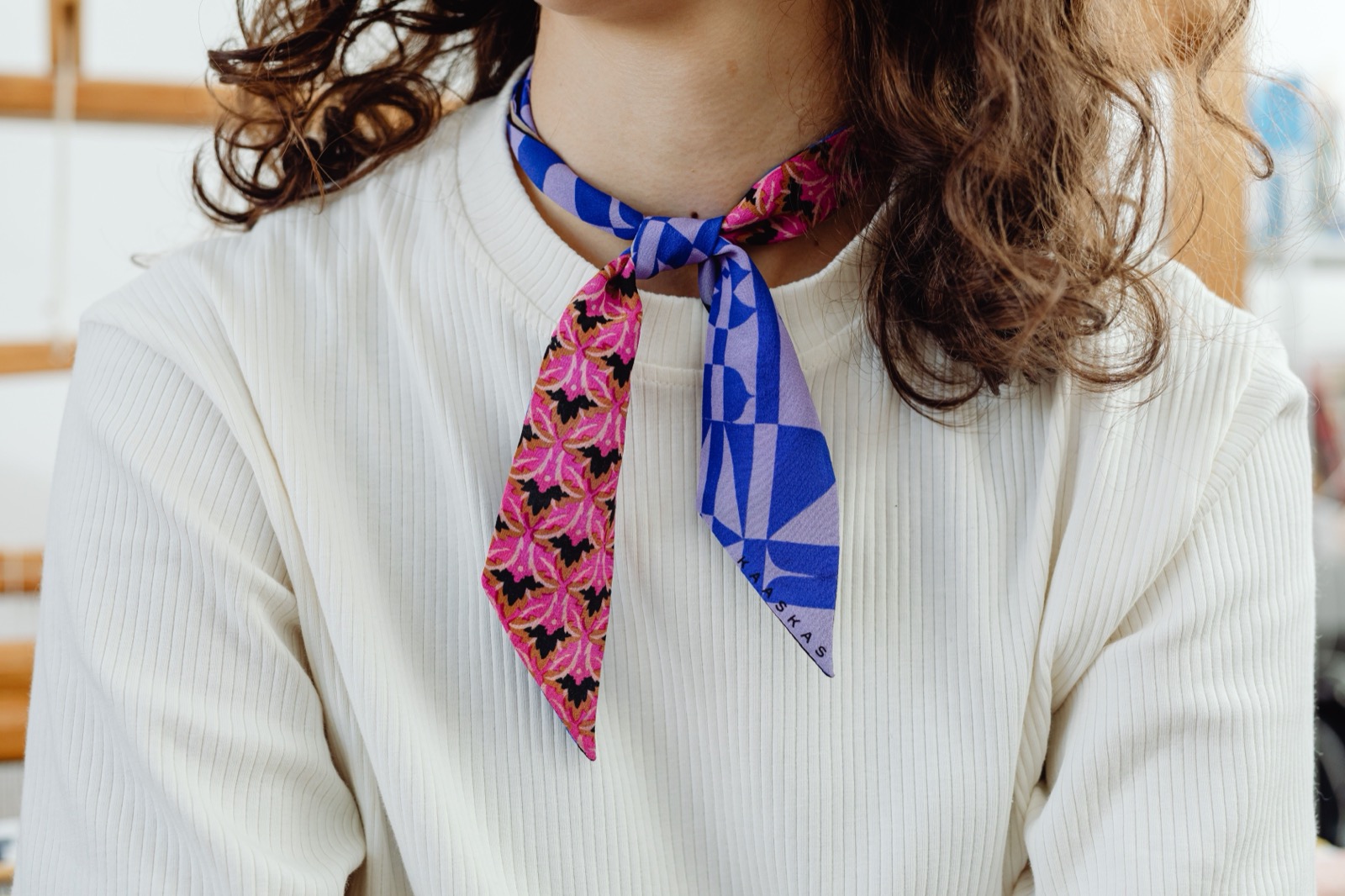
For a shirt with an open neck, fold the scarf into a narrow band and place the centre behind the neck. Bring the ends forward and make a loose, simple knot. Leave enough space that turning your head feels easy. The ends can sit inside the shirt, outside it or slightly to one side. Try each arrangement before settling on the one that feels least self-conscious.
The neckline and the scarf should leave one another enough room. If the collar is stiff and high, a bulky knot may feel crowded. If the shirt is soft and open, a firmer scarf can give the area some definition. You might remove a necklace when adding the scarf, especially if both occupy the same space. That is an editing choice, not a ban on wearing jewellery and scarves together.
Fold a square into a triangle and place the long folded edge where you want it around the head. Bring the ends back and tie them gently, adjusting the coverage before tightening anything. Decide whether you prefer the ears covered or exposed and whether the knot belongs above or below loose hair. Small changes in placement can make the difference between an accessory you forget about and one you keep touching.
Try the arrangement while putting on sunglasses or a coat, because those movements can disturb a carefully placed scarf. If it slips immediately, choose a less slippery fabric or a different fold rather than tying it painfully tight. Keep the knot comfortable and avoid arrangements that pull at the hairline. There is no fashion advantage in tolerating a headache for an accessory that is supposed to make the day feel easier.
A scarf on a bag works particularly well when you want to introduce colour without changing the clothes themselves. Tie it loosely around a handle or loop it through suitable hardware, keeping the ends away from zips and fastenings. A small bag usually needs less fabric than a large tote. Fold the scarf more narrowly if the knot seems to be wearing the bag instead of the other way around.
Think about how you carry the bag. A scarf wrapped around a handle will be handled repeatedly and may need more frequent care. A long loose end can catch on things or dip into an open bag. Shorten the fold if that becomes inconvenient. If the bag has a delicate finish, avoid hardware or knots that rub against it. The accessory should remain easy to remove when weather, travel or the day's practical demands change.
With jeans and a plain crewneck, a small scarf at the neck can add a deliberate focal point. Keep the knot relaxed and choose a fold that reveals a colour you already like. With a flowing dress, a headscarf can shift the emphasis upward and make the outfit feel more complete without adding another layer. With tailoring, a scarf on a practical tote can introduce softness while leaving the line of the jacket untouched.
These are starting arrangements, not complete outfits to copy. Change the footwear according to where you are going. Add the coat that suits the weather. If your scarf has become the strongest element, let that happen without trying to repeat its pattern elsewhere. If it feels too noticeable, choose a version closer in colour to the surrounding fabric. A small accessory can make a clear statement without becoming a test of confidence.
Store scarves where you can see them and reach them easily. A beautiful square hidden at the back of a drawer is unlikely to help on a rushed morning. Keeping two or three folds in mind is enough; you do not need a catalogue of complicated tying techniques. Once you find a placement that feels comfortable, repeat it with different clothes and notice what changes.
The most useful scarf is not necessarily the most expensive or the most recognisable. It is the one whose fabric, size and colours make sense in your life. A scarf inherited, found secondhand or bought years ago can be just as effective as something new. Give it a few unhurried minutes in front of the mirror, then let the rest of the day tell you whether you want to wear it that way again.
WINTER WARDROBE
Compare these current collections with the shapes and layers you already wear.
COS is a useful starting point when comparing a fine merino layer with a more substantial crew-neck or funnel-neck knit. Check the composition and care instructions on the individual item before choosing.
ARKET’s wool-coat category gives you several silhouettes to compare, from a shorter peacoat to belted and oversized shapes. The most useful choice is the one that accommodates your normal layers and daily routine.
OUR WRITERSAndrea HillsRead more from Andrea Hills on Her & Bloom.
All stories by Andrea Hills ↗